My Electricity Bill in Riyadh: Costs & Mistakes to Avoid
When I moved to Saudi Arabia, the biggest horror story I heard wasn’t about the heat outside, it was about the cost of keeping everything cool inside the house.
I was shocked to hear how some big families spend close to $400 (1,500 SAR) or more per month just for electricity! This is a huge chunk of the monthly budget—see my full cost of living in Riyadh breakdown for other expenses.
As an expat coming from a tropical country in Southeast Asia, we didn’t have extreme weather that would skyrocket our electricity bill throughout the year.
So, when I heard how much people have been paying for electricity bills in Saudi, I got scared.
My Electricity Bill in Riyadh: Costs & Mistakes to Avoid
In this article, I want to share with you what to expect when you move to Saudi (particularly Riyadh) in terms of your utility bills.
My husband and I manage to spend around $50–$20 (200–300 SAR) per month for electricity on average.
But we made some mistakes (huge ones) along the way that sent our bill skyrocketing unexpectedly.
Here is the real breakdown of our summer vs. winter electricity bills in Riyadh, the tariff rates you need to know, and the one mistake you must avoid.
Real Electricity Bill Breakdown in Riyadh: Summer vs. Winter
Many expats ask, “Will there be a difference between my summer and winter electricity bill?” The answer is: it depends.
If you live in a modern apartment, you most likely won’t feel the extreme heat during winter, as the whole building usually comes with central AC.
I noticed this when I visited a friend who lives in a modern apartment (common in newer neighborhoods like Al Malqa or Al Narjis). Her house felt cozy and chill despite the 40-degree temperature outside.
Since we moved to Riyadh in Feb 2025, we stayed in an apartment villa (like most locals do), and our electricity bills look like this:
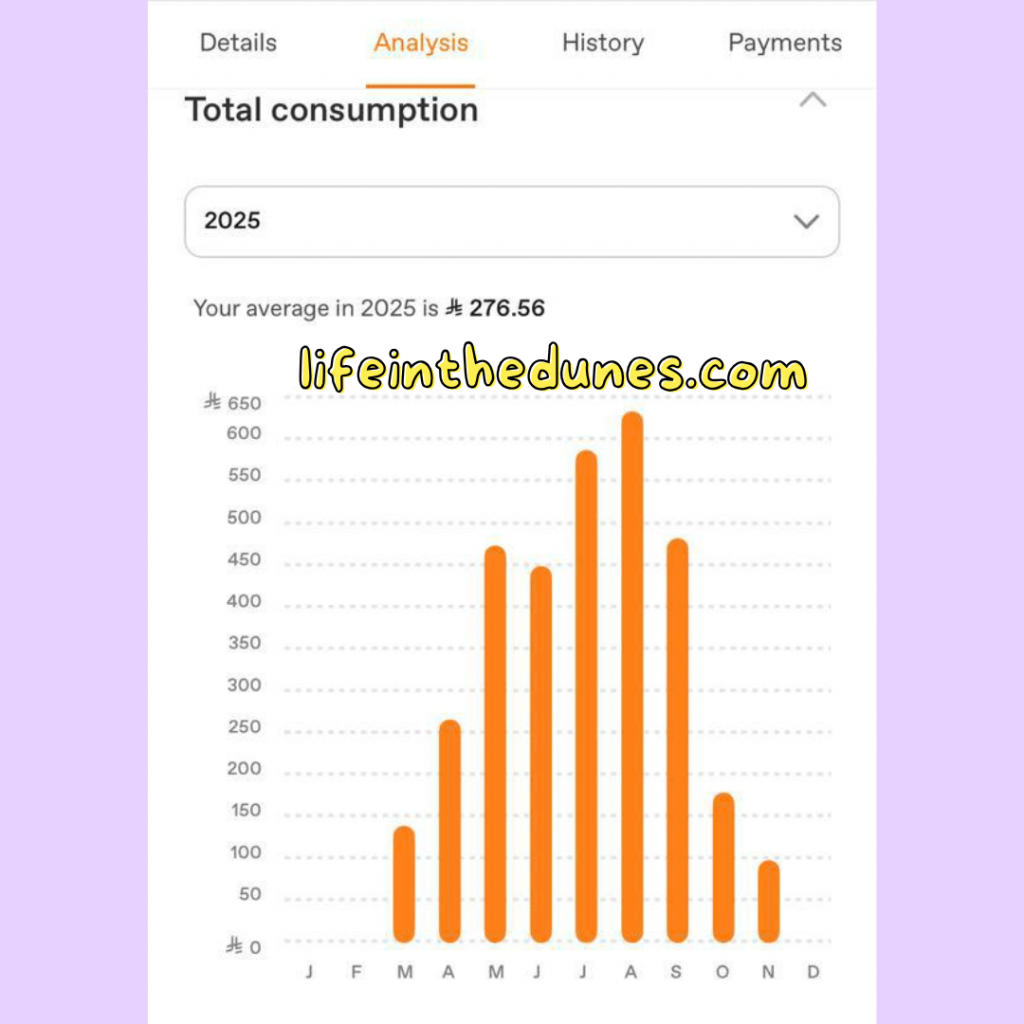
During the winter season (November – March), you will barely use AC for cooling. In fact, Riyadh gets cold enough (single digits at night!) that you might even buy a heater.
Since my husband and I installed dual-function split ACs, we run them in “Heater Mode” during winter.
Surprisingly, heating costs us about the same as our lower-usage months, staying in the 200–300 SAR range, as we only heat the room we are actually using.
Summer is a totally different case, unfortunately.. With temperatures hitting 45°C+, the AC works overtime, pushing our bill up to 600 SAR.
The AC Mistake That Spiked Our Utility Bill
When we first moved to Riyadh, our rental house—like most here—didn’t come with ACs installed. We had to buy them ourselves (a common surprise I cover in my guide on how to furnish your apartment in Riyadh).
To stick to our budget, we installed them gradually before summer hit.
Everything was fine until, one month, our bill suddenly cranked up to $200 (750 SAR) out of nowhere.
I was shocked. I asked friends who have lived here for a long time, and they agreed that’s not normal for a couple. My husband and I racked our brains trying to find the culprit. And we did.
We found the culprit.
Prior to that, we had bought one second-hand AC to save money on the upfront cost. It turned out to be an energy vampire.
Old units often have terrible energy efficiency ratings compared to modern inverter Split ACs. Luckily, that was the only used unit we bought. The rest were new, energy-efficient split ACs.
Tip: If you are moving to Riyadh, invest in buying new ACs. Never buy secondhand ones no matter how good the salesman says they are.
Understanding SEC Tariff Rates in Riyadh
The Saudi Electricity Company (SEC) uses a tiered system, but for most residential expats, the math is simple.
- Tier 1 (Consumption 1 – 6,000 kWh): 0.18 SAR per kWh
- Tier 2 (Consumption > 6,000 kWh): 0.30 SAR per kWh
Good news: As a couple living in an apartment, you rarely hit the higher tier (0.30 SAR) unless you leave the ACs on 24/7 with the windows open or live in a massive uninsulated villa. We almost always stay in the cheaper 0.18 SAR tier.
Budgeting with the SEC Fixed Bill Service (Alkahraba)
If you hate the shock of seeing a 600 SAR bill in August after paying only 200 SAR in February, you can try the Fixed Bill Service.
It is a service that allows you to pay a fixed monthly fee depending on your actual usage over a 12-month period.
Basically, SEC calculates your average yearly usage and lets you pay a fixed amount (e.g., 400 SAR) every single month, regardless of the season.
- Summer: You still pay 400 SAR (even if you used 600).
- Winter: You still pay 400 SAR (even if you used 200).
It doesn’t save you money in the long run (you pay the difference at the end of the year if you went over), but it is a lifesaver for monthly budgeting.
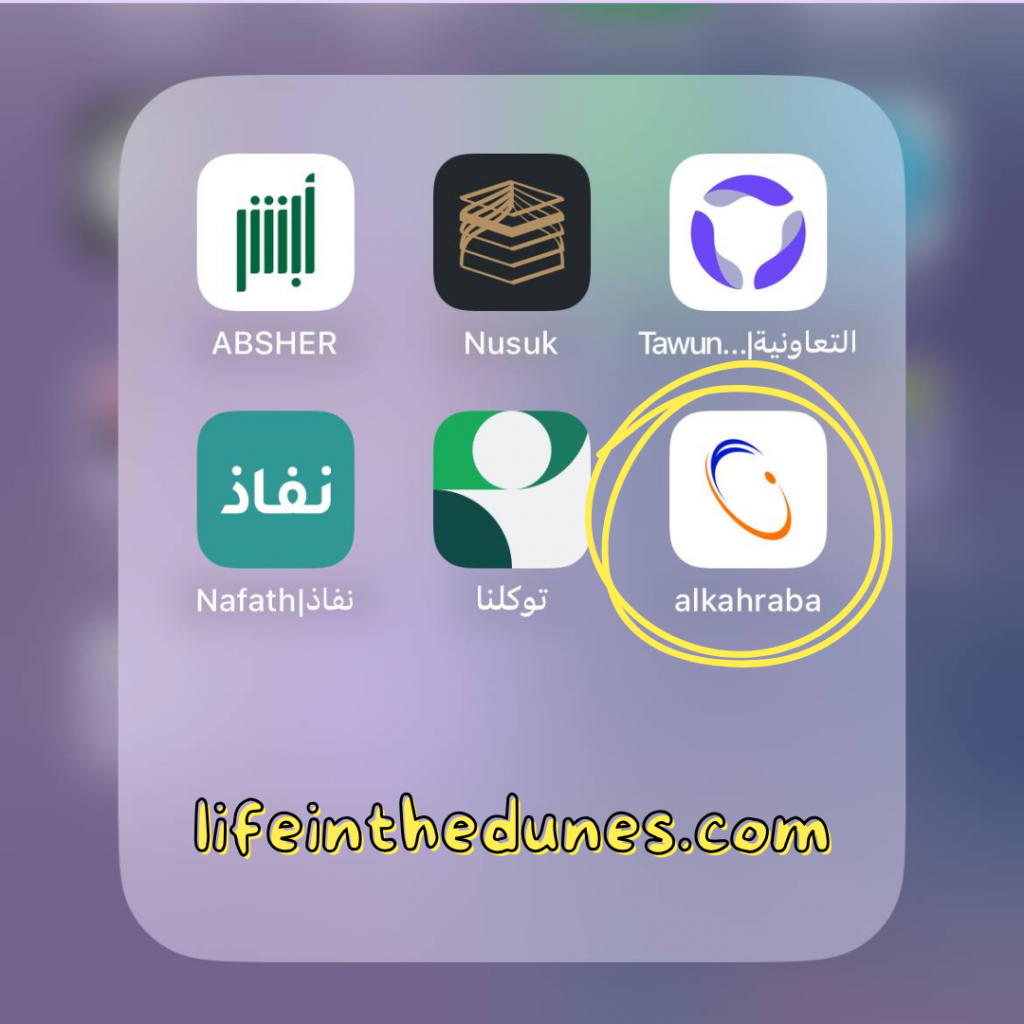
Pro Tip: You can sign up for this directly in the SEC App. The app name is “Alkahraba”. Check out other must-have apps for expats moving to Riyadh.
Conclusion
You can also ask people in your community how much they’re paying for electricity, as it hugely depends on how many AC units are in your house, how often they are being used, and for how many hours. Big families will often spend more on their electricity bills.