12 Best Saudi Traditional Sweets & Where to Find Them
Best Saudi Traditional Sweets You Have To Try While You’re in Riyadh
If you are visiting Saudi Arabia, you’ll discover that the hospitality here is very warm, especially if you are lucky enough to be invited to a home gathering.
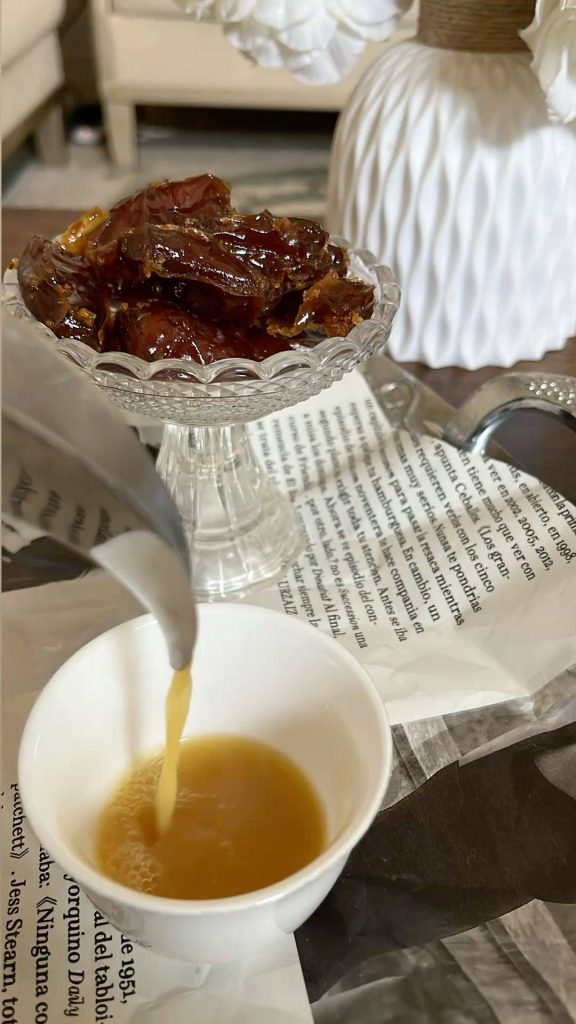
You will immediately find Gahwa (Saudi coffee) paired with sweets on the table.
I remember the first time I met a local friend here, she invited me to her house for Iftar (the meal to break the fast during Ramadan).
The spread on the table was marvelous and huge, even though I was the only female guest!
My husband, on the other hand, was hosted in a separate room strictly for men (a common custom I explain in my 10 Things You Must Know Before Moving to Saudi Arabia guide).
Whether you are traveling to Saudi Arabia as a tourist, a pilgrim, or an expat living in Saudi Arabia, one thing you simply shouldn’t miss is trying the traditional local sweets that you can’t get anywhere else in the world.
I’m going to share 12 types of sweets, some are popular Arabic desserts you might know, while others are traditional Saudi specialties. If you are based in Riyadh, I’ve also listed exactly where you can find them.
1. Kunafa
This is probably the most famous Arabic sweet, and it happens to be my favorite, too.
When I spent a year living in Abu Dhabi, this became my ultimate comfort dessert. So when I moved to Riyadh, my first mission was to search for the best Kunafa in town.
Kunafa is essentially spun pastry (kataifi) soaked in a sweet, sugar-based syrup called attar, and typically layered with cheese or cream.
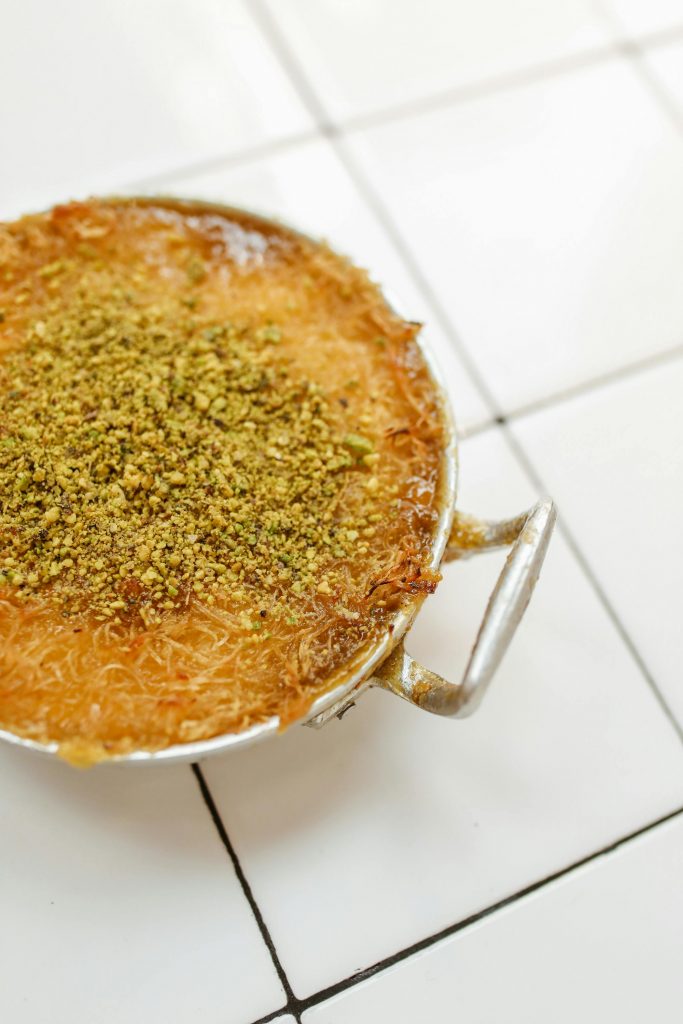
The top is crunchy, buttery, and sweet, while the bottom layer of cheese (usually Nabulsi or Akkawi) is warm, stretchy, and slightly salty.
When you take a bite, that salty-sweet combination is very delicious and almost addictive.
In Riyadh, you will usually find two main types: Khishnah (rough/crunchy crust) and Na’amah (smooth/soft semolina crust).
While some people prefer the crunch of the hard one, I personally love the soft Kunafa!
Where to find Kunafa in Riyadh
2. Basbousa
My love story with Basbousa actually started a few years ago while I was at university.
There was an Arab student who sold Basbousa on campus, and my friends and I were crazy about it. We used to spend all our pocket money just to buy it from her.
When the semester ended, I felt so sad, and I genuinely regretted never asking her for the recipe.
Every Basbousa I tried after that just wasn’t the same. That is, until I moved to Riyadh and was invited to a friend’s house.
She made it so well that it instantly brought back those university memories.
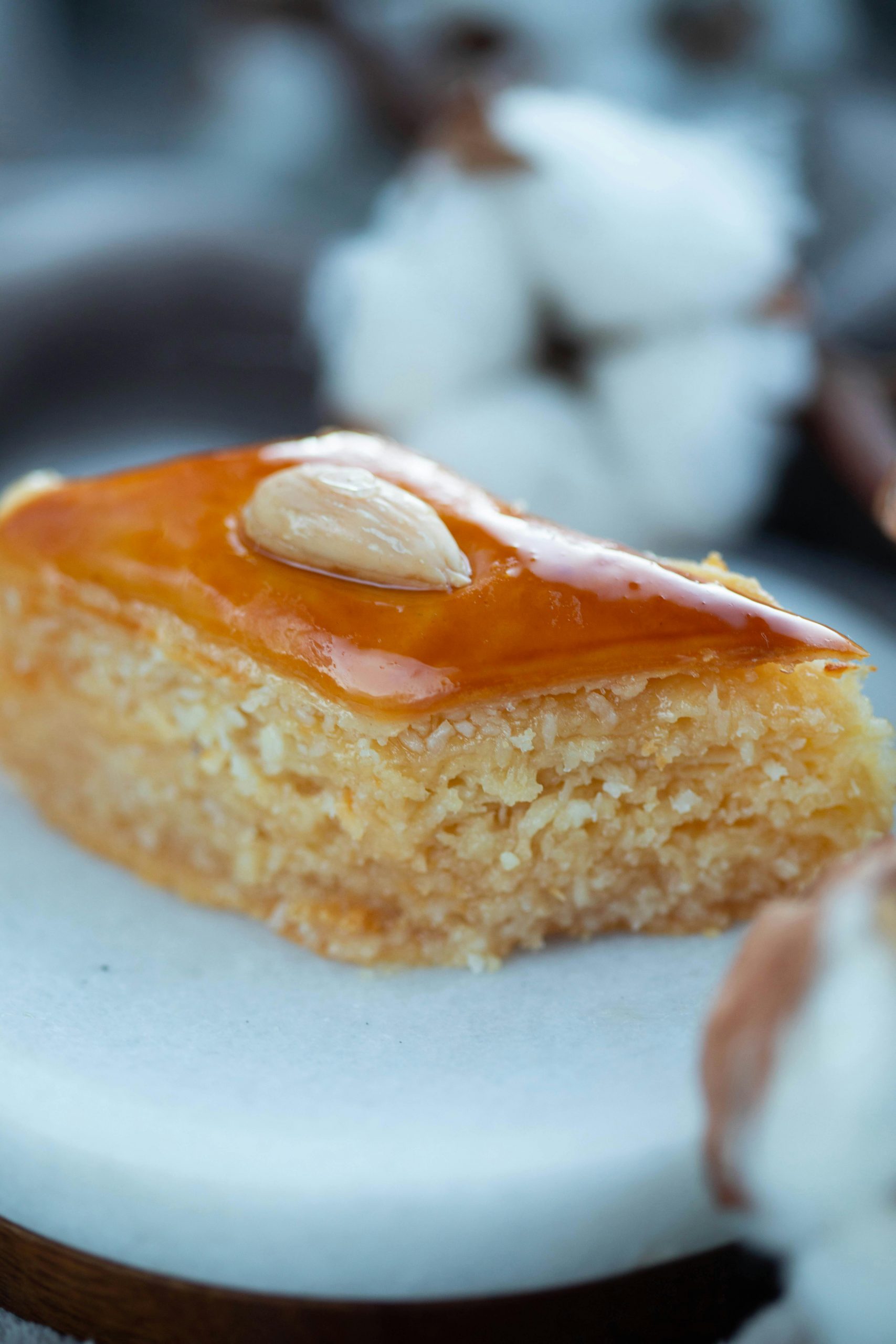
If you are wondering what Basbousa looks like, this is it:
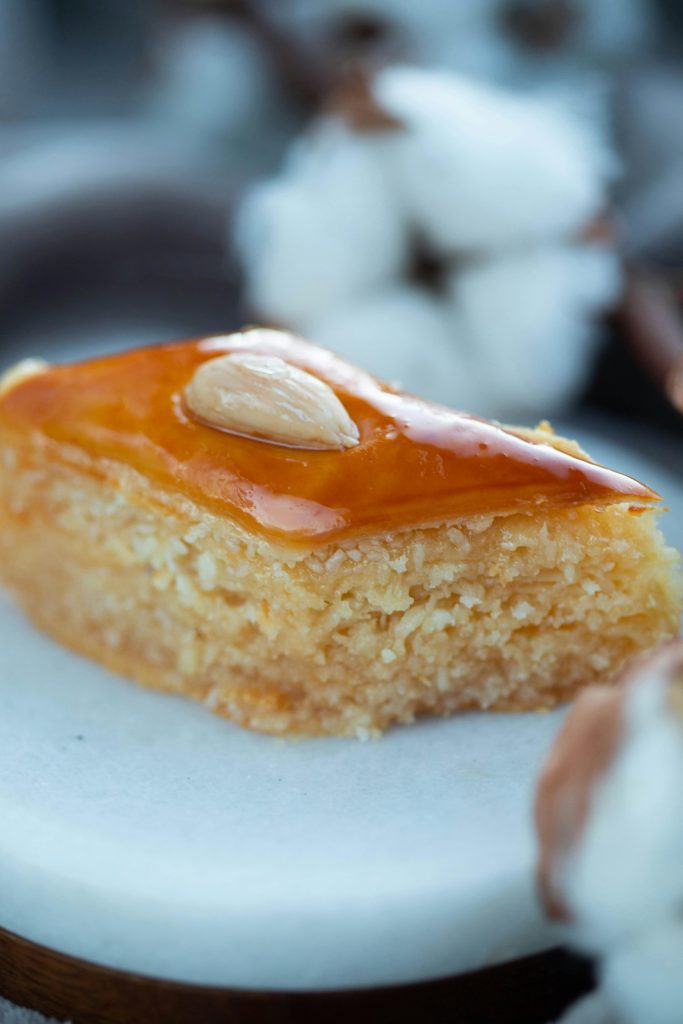
It is a semolina cake soaked in syrup, often flavored with rose water or orange blossom water, and topped with an almond or walnut.
While it sounds simple, you can tell a great basbousa from its texture and taste. A good Basbousa is usually moist, dense, and melts in your mouth.
Sometimes you will find it stuffed with Gishta (clotted cream).
The texture is grainy in a pleasing way, which is very distinct from the fluffiness of a standard sponge cake.
Where to find Basbousa in Riyadh
- Kunafa wa Basbousa (Tahlia Street): Location
- Al Tazaj (their basbousa is exactly to my liking!): Location
3. Baklava
You might think you know Baklava, but the variety available in Riyadh is staggering.
While it originated in the Ottoman Empire, it is a staple in Saudi households, especially during Eid.
Imagine dozens of whisper-thin sheets of phyllo, brushed with butter, filled with crushed nuts (usually pistachios or walnuts), then baked until perfectly golden and crisp.
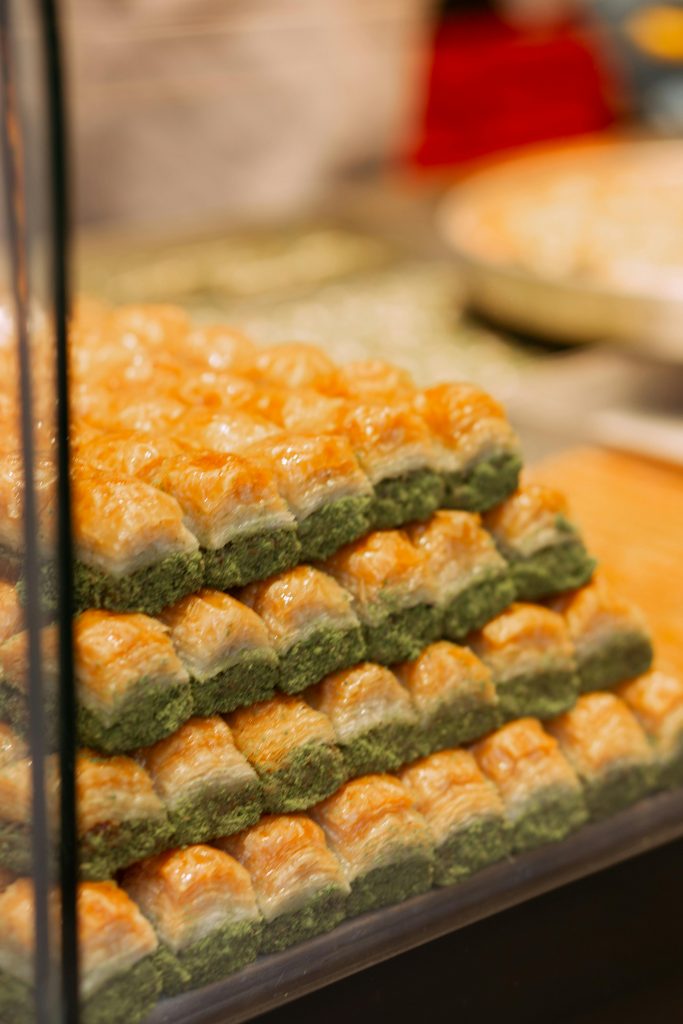
What I’ve noticed here is that people tend to prefer Baklava that’s heavy on pistachios but not swimming in syrup.
It stays crunchy, sweet, and rich without feeling overwhelming.
Where to find Baklava in Riyadh
Habibah Sweets – Highly recommend! A friend suggested it, and it really lived up to the hype.
Baba Khabbaz – I tried their Baklava, but personally, it didn’t hit the mark for me.
Ferid Oglu Baklava – A super popular spot in Riyadh and still on my list to try next!
4. Um Ali
The first time I heard the name “Um Ali”, I was so confused.
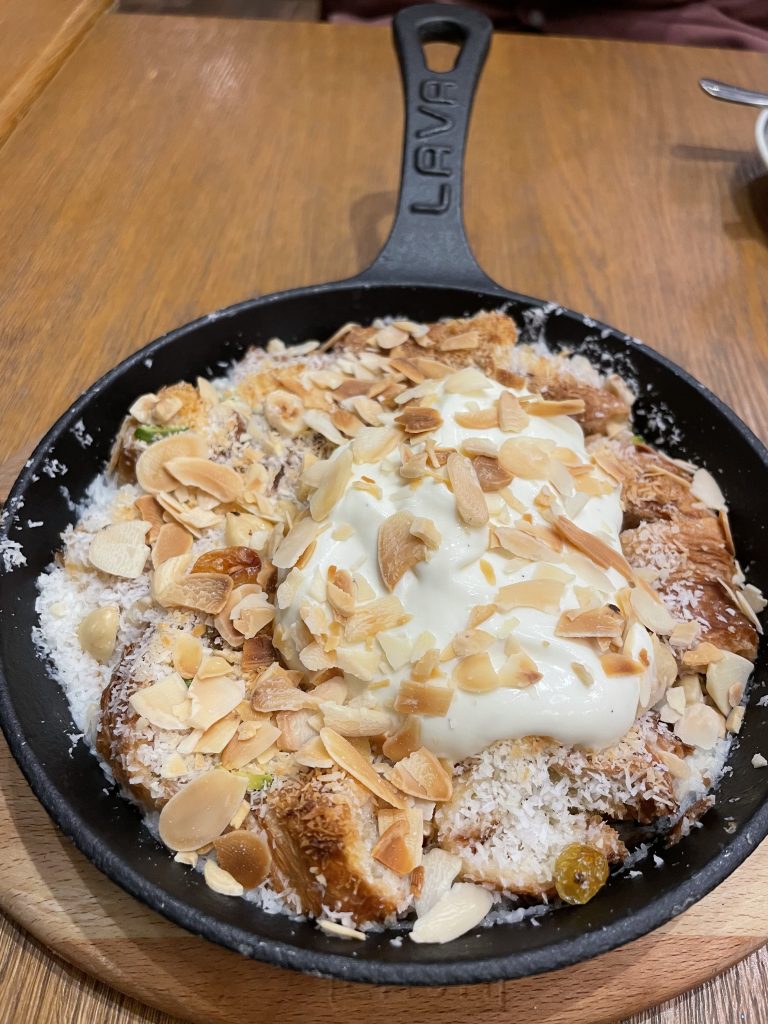
It literally means “Ali’s mother,” and I remember thinking what a unique name!
Turns out, it’s an Egyptian dessert that Saudis have fully embraced.
If you’re in Riyadh during winter, this is the perfect winter dessert that will make you feel cozy from the inside out.
It’s usually made with pieces of puff pastry or croissant soaked in hot milk, sugar, and cream, then topped with nuts, raisins, and sometimes coconut flakes.
After that, it goes into the oven until the top turns golden and slightly crisp.
The result? Warm, creamy, milky, slightly sweet… almost like the most comforting bowl of cereal you’ve ever had but hot, richer, and way more indulgent.
Where to find Um Ali in Riyadh
Om Ali: Location
Aseeb Restaurant: Location
5. Aseeda
Aseeda isn’t really a “dessert” in the way most people think of sweets.
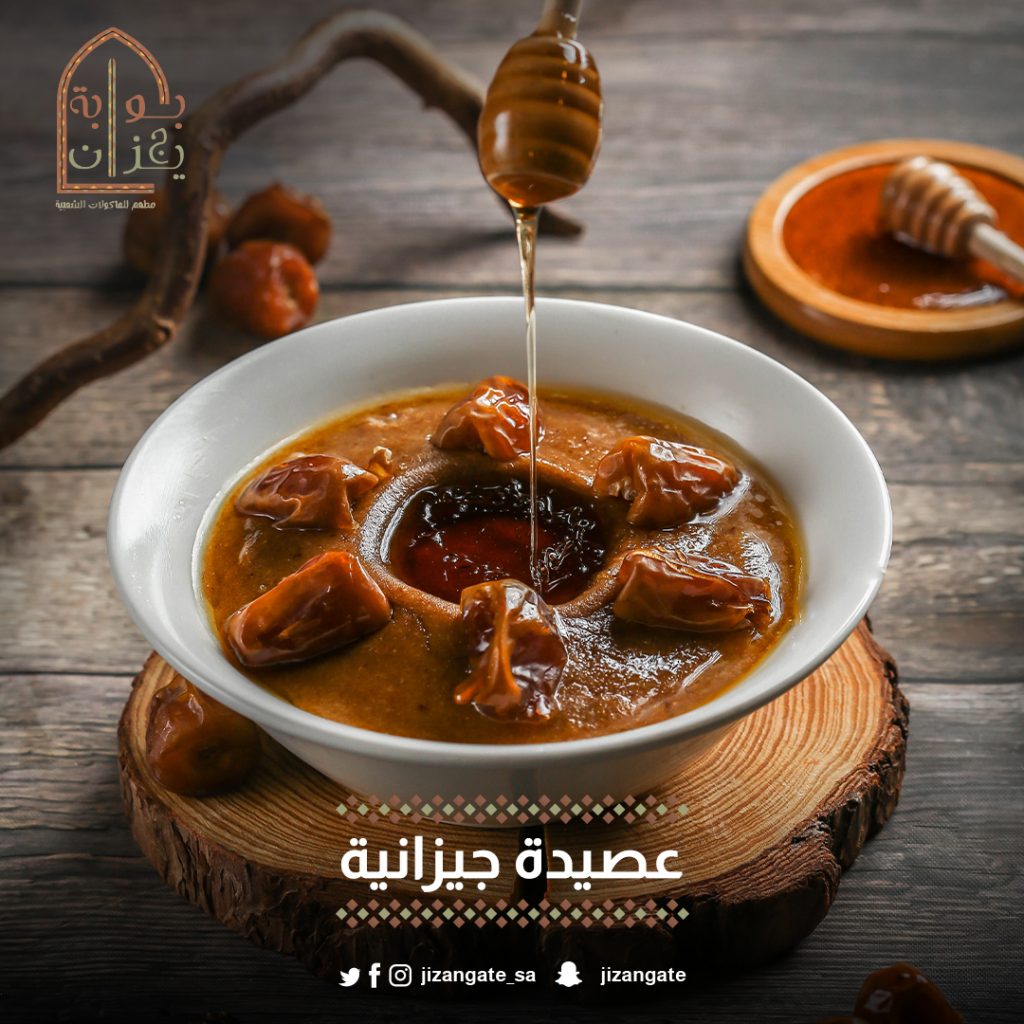
It’s more like a dense, porridge-style dish made from wheat flour and water, cooked until it turns into a soft dough.
In Saudi, especially in the south and central regions, it’s usually served with a little well in the center filled with ghee (clarified butter) and honey or date molasses.
You eat it with your fingers, tearing off pieces and dipping them into the ghee and honey.
It’s incredibly filling and was historically eaten by Bedouins to keep them going through long days.
The flavor is earthy and rich, and it feels very “old-world”. It is simple but very satisfying.
Where to find Aseeda in Riyadh
Aseedah wa Maraq: Location
6. Areeka
Areeka is often confused with Aseeda, but think of it as its richer, sweeter cousin from the southern regions of Saudi Arabia, like Jizan and Abha.
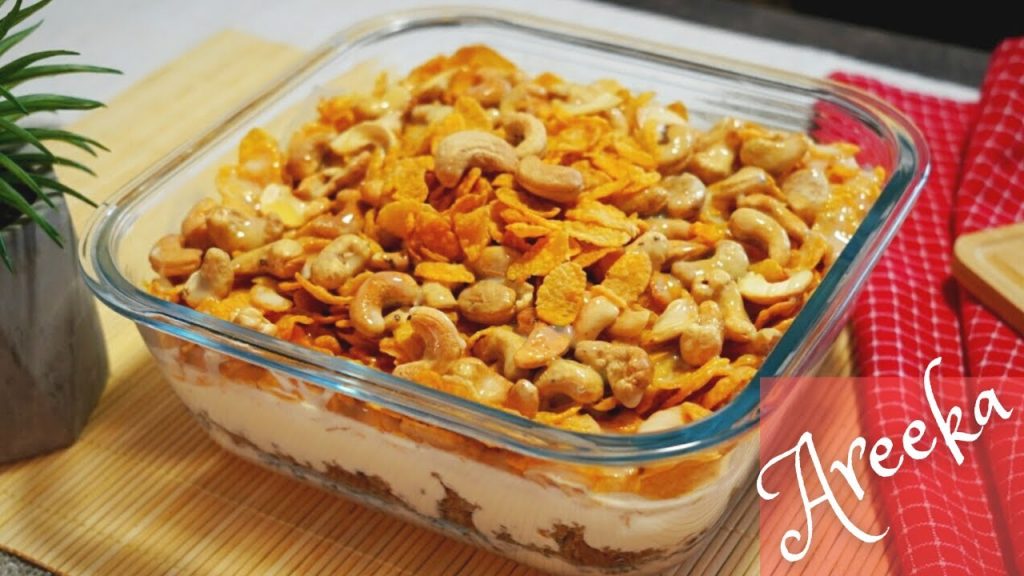
It’s made by mashing brown bread and mixing it with dates and ghee.
On top, it’s usually drizzled with honey, extra dates, and sometimes cream or condensed milk.
Some modern versions even sprinkle cornflakes on top for a little crunch.
While Aseeda is smooth and doughy, Areeka has a heartier texture thanks to the bread and dates.
It’s so filling that it can easily be a meal on its own and is a popular breakfast choice, though it definitely counts as a sweet treat.
Where to find Areeka in Riyadh
Al Majlis Al Khaleeji: Location
7. Labaniyah
Labaniyah comes from the Hijaz region (Makkah and Madinah) and is basically a milk-based fudge or candy.
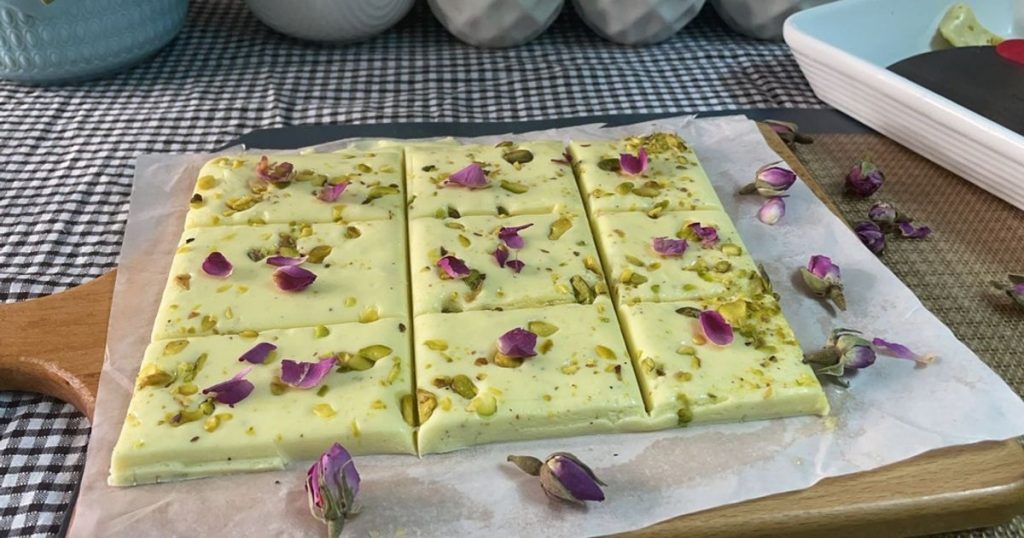
Picture the flavor of rich, concentrated milk and sugar, gently flavored with cardamom and sometimes a hint of rose water, cooked down until it’s soft but solid enough to hold its shape.
It usually comes in small balls or cubes, often dusted with chopped pistachios.
It melts in your mouth with an intense, creamy sweetness.
It’s definitely on the sugary side, so one or two pieces paired with a cup of bitter Saudi coffee is the perfect combo.
Where to find Labaniyah
As this is a Hejazi dessert, it’s quite hard to find them in Riyadh.
In Madinah and Jeddah, you can find them at sweet shops or visit online store like Maamol Tahlia.
8. Luqaimat
If you visit Saudi during Ramadan, you’ll see Luqaimat everywhere.
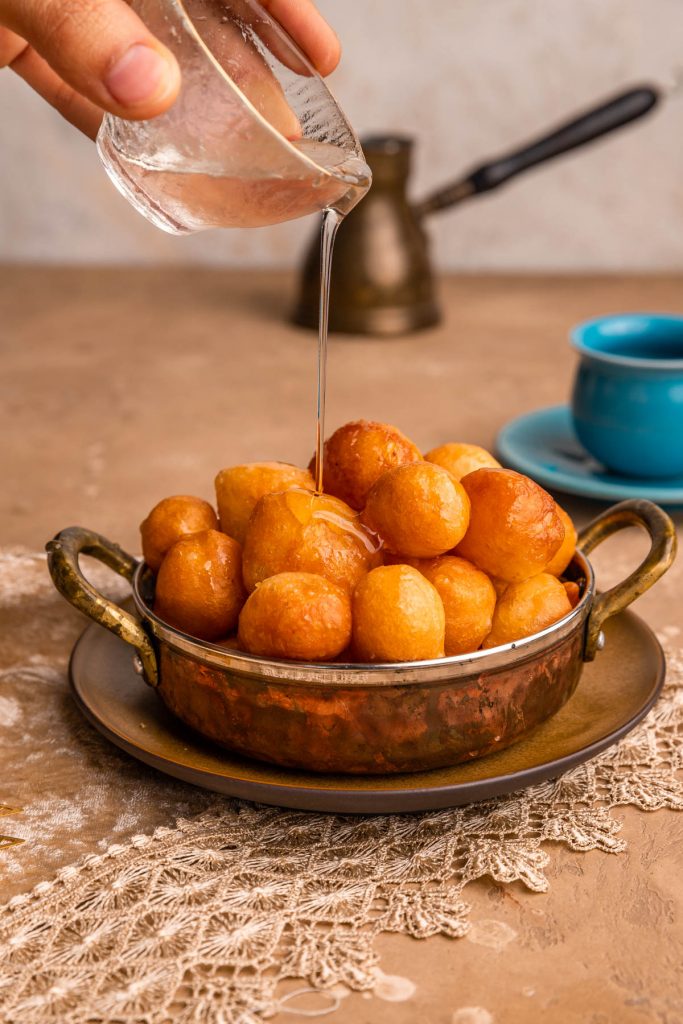
I first discovered luqaimat when I was in the UAE and had the chance to try the Emirati Luqaimat.
But the Saudi luqaimat, looks similar to the Emirati ones.
Imagine luqaimat like tiny, deep-fried dumplings. They are crispy on the outside and light, airy, and sponge-like on the inside.
Traditionally, they’re drizzled with date molasses (dibs) and sprinkled with sesame seeds, though you’ll also find modern twists with chocolate or honey.
The flavor is a bit like a donut hole, but lighter, with a subtle tang from the yeast in the batter.
I must tell you that they are impossible to eat just one. You’ll find yourself popping them into your mouth like popcorn! XD
Where to find Luqaimat in Riyadh
Luqaimat Tuf: Location
9. Maamul
Maamoul are delicate shortbread cookies filled with dates, pistachios, or walnuts, basically the official cookie of Eid in Saudi Arabia.
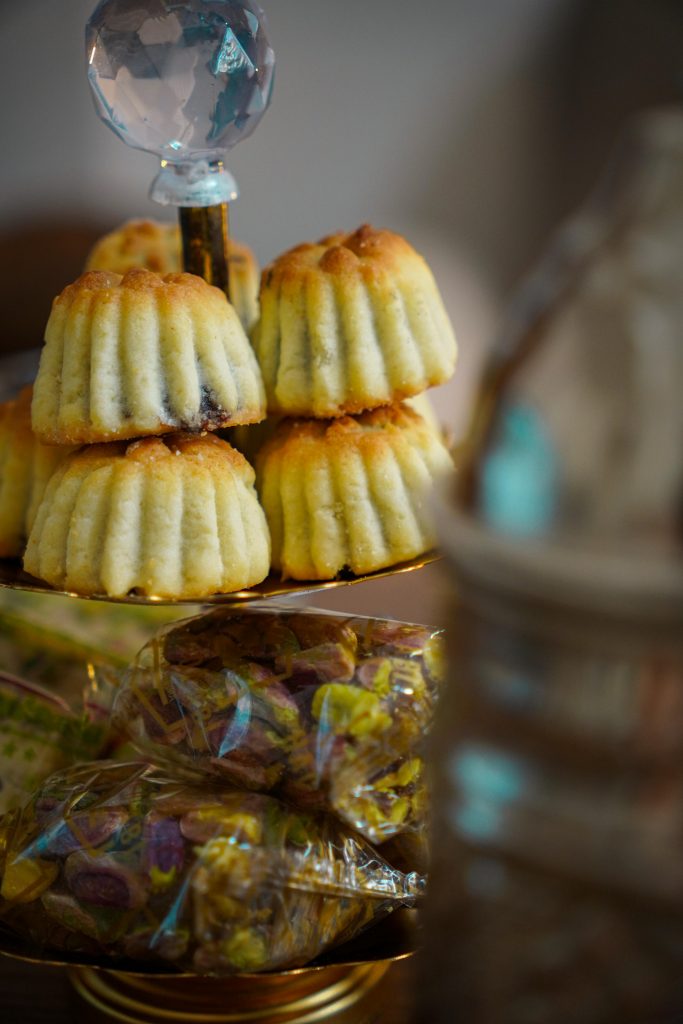
They’re made with semolina or flour and lots of butter or ghee, sometimes scented with rose water or mahlab.
The date-filled ones are usually round or ring-shaped, while the nut-filled versions are slightly domed and dusted with powdered sugar.
The best part is the texture: crumbly, buttery, and so soft that it practically melts the second it touches your tongue.
Where to find Maamul in Riyadh
Habibah Sweets (Qurtubah branch): Location
Baba Khabbaz (Al Thumamah Rd branch): Location
10. Qishd
Qishd is a very traditional Najdi dessert that is simple yet incredibly satisfying.
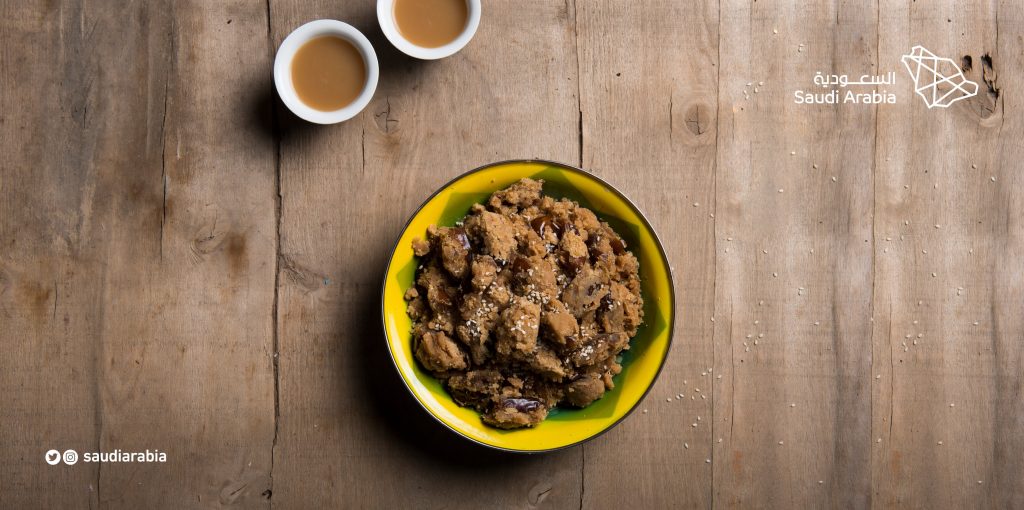
It’s made by cooking pitted dates with butter and heavy cream (or sometimes yogurt or a flour mixture, depending on the family recipe) until everything turns into a soft, warm, caramelized mash.
It might look like a dark sticky porridge, but the flavor is incredible. Think toffee mixed with dates.
It’s usually eaten in winter, shared from one big bowl, and meant to be enjoyed together.
Where to find Qishd in Riyadh
Najd Village: Location
11. Klijah
Klijah is a well-known biscuit from the Qassim region, north of Riyadh.
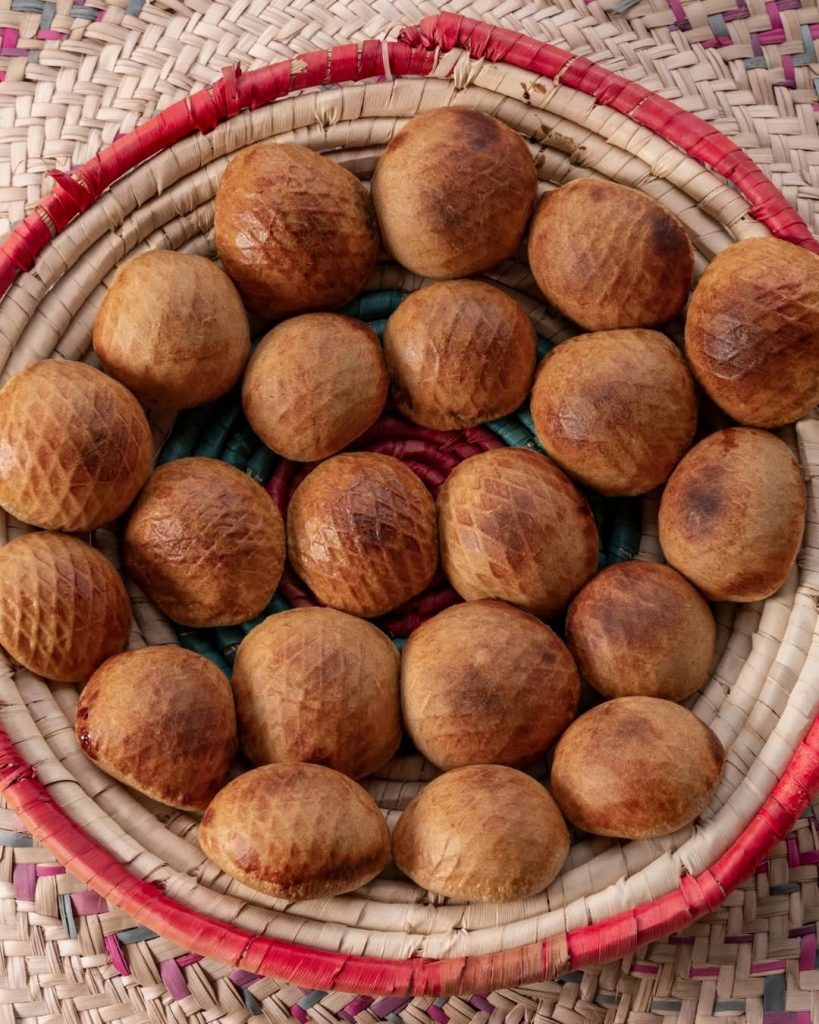
It’s a dry, round biscuit with a hollow center that’s filled with a sticky mix of molasses, cinnamon, ginger, and black lime.
The outside is hard and crunchy, usually stamped with a pretty waffle-like pattern.
Take a bite and the spices hit you right away. It’s warm, fragrant, and not overly sweet. It’s the kind of biscuit that’s made for dipping into tea.
The black lime adds a subtle tang that makes it totally different from Western-style spice cookies.
Where to find Klijah in Riyadh
Aseeb Restaurant: Location
12. Dibyazah
Dibyazah is a beloved specialty from the Hijaz region and it’s something you usually only see on the table during Eid al-Fitr breakfast.
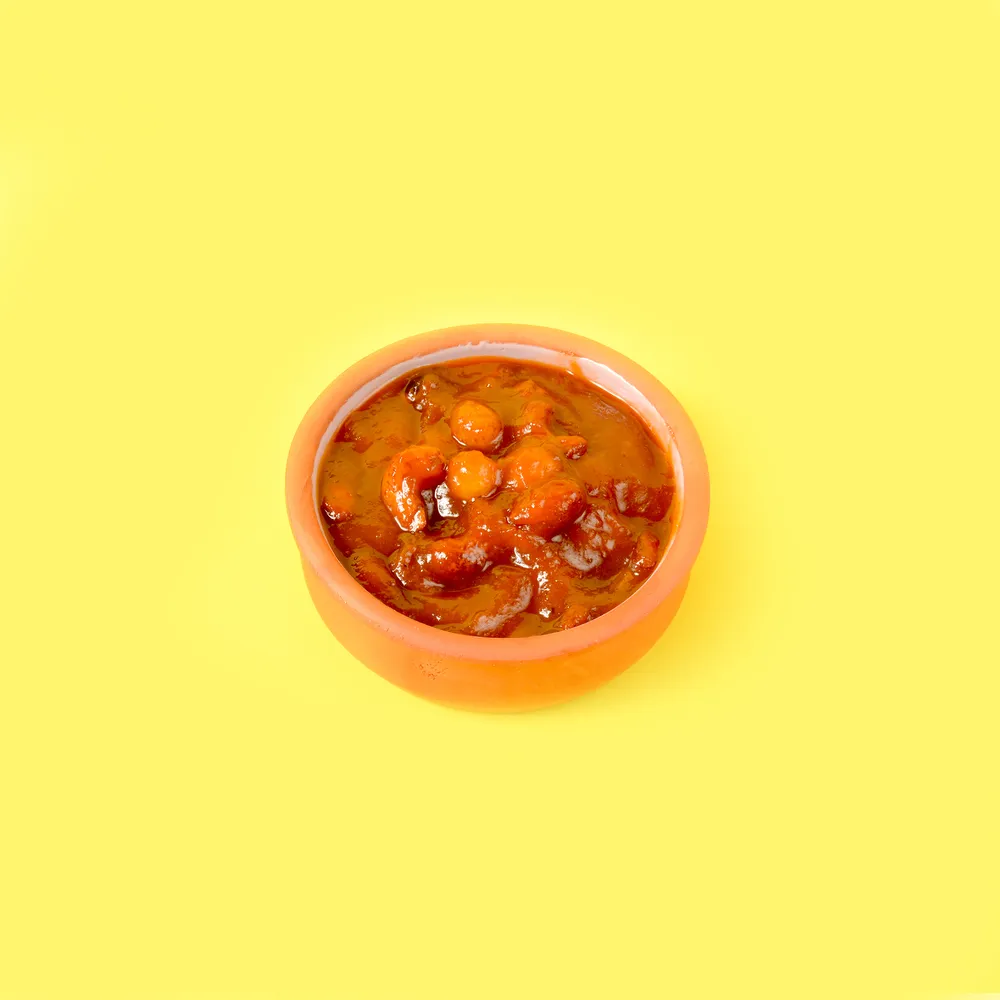
Think of it like a luxurious marmalade.
It’s slow-cooked with dried apricots, roasted nuts like almonds and pistachios, plus figs and raisins.
Everything melts together into a glossy, deep orange compote that’s sweet, a little tangy, and full of texture.
It feels festive and a bit indulgent which is why many people consider it one of the most special Eid sweets.
Where to find Dibyazah in Riyadh
Because it’s so tied to Eid, it’s not always easy to track down outside the season.
Safaa Badrah, a well-known Hijazi sweets brand, sometimes sells jars of Dibyazah, either in specialty dessert shops or online.
And around Eid, bakeries like Diplomat usually release limited batches, so if you spot it, grab it.
How to enjoy Arabic sweets (the local way)
When you go out to try these, remember the golden rule: Balance.
Saudi sweets are intense.
They are rich in sugar, honey, and ghee. You are rarely meant to eat them with water or soda. The correct pairing is always with specialty coffee or the Saudi coffee.
Saudi coffee is yellowish-green, brewed with cardamom and saffron, and unsweetened.
Its bitterness and herbal notes cleanse your palate after every bite of sticky Kunafa or sweet Maamul, allowing you to go back for more without feeling overwhelmed.